From Passive Scrolling to Purposeful Passion: How Smart Recommendations Unlocked My Hidden Hobbies
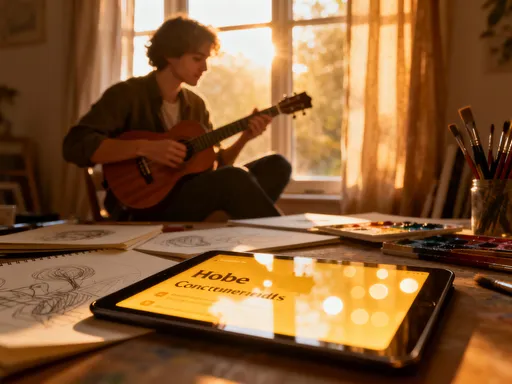
Have you ever felt stuck in a loop of endless scrolling, watching random videos or buying things you don’t need? I was there too—until I realized the same tech that distracted me could actually guide me. Smart recommendation systems, the quiet engines behind what we see online, stopped feeling like traps and started becoming personal allies. They began suggesting not just products, but possibilities—painting classes, journaling prompts, even ukulele tutorials. This is how my digital noise turned into a compass for self-discovery.
The Trap of Mindless Consumption
Let’s be honest—how many of us have sat down for “just five minutes” on our phones, only to look up an hour later, feeling strangely empty? I used to do that every evening after the kids were in bed. I’d tell myself I just needed to unwind, so I’d open an app and fall into a stream of videos: people organizing closets, making perfect pancakes, hiking mountain trails. It all looked so peaceful, so fulfilling. But when I closed the screen, I didn’t feel calm. I felt restless. Worse, I felt guilty. I hadn’t done anything with my time—no rest, no progress, no joy.
What I didn’t realize then was that I wasn’t just choosing to scroll. I was being guided—gently, subtly—by systems designed to keep me engaged. Every click, every pause, every time I watched a video to the end was feeding data into powerful algorithms. And those algorithms were learning how to hold my attention, not how to help me grow. I started noticing a pattern: the more I watched videos about creative hobbies, the more I saw ads for craft supplies, art kits, or journaling notebooks. But I never clicked. I told myself, “That’s not for me,” or “I don’t have time.” The truth? I was afraid. Afraid I wouldn’t be good at it. Afraid it would be another thing I started and abandoned. So I stayed in the cycle—watching, wanting, but never doing.
And I wasn’t alone. So many of us use technology to escape, only to feel more drained. We think we’re relaxing, but we’re actually absorbing noise—endless content that doesn’t connect to our lives or values. The irony is that the very tools meant to connect us often leave us feeling disconnected—from ourselves, from our purpose, from the things that truly matter. But what if that same technology could help us break free? What if the algorithms that once kept us stuck could actually point us toward what we’ve been missing?
From Noise to Nudges: Seeing Tech with New Eyes
The shift started with one small suggestion. I wasn’t searching for anything. I wasn’t even in the mood to try something new. I was just browsing a shopping app, probably looking for a new phone charger, when I saw it: “Beginner watercolor kits for creative beginners.” Not headphones. Not phone cases. Not another kitchen gadget. This was different. It felt… personal. Like someone had been paying attention. I paused. I stared at the screen. And then I laughed. Because deep down, I knew it was true. I had always loved colors. As a kid, I used to paint with my fingers, mix watercolors until the paper warped. I hadn’t touched a brush in twenty years, but somehow, the app knew.
That moment changed everything. I started noticing other suggestions—journaling prompts, guided meditation playlists, even a video titled “5-Minute Sketching for Busy Moms.” They weren’t loud or pushy. They were quiet, almost gentle. And they kept showing up. Not just on one app, but across platforms. A video app suggested a beginner ukulele course. A reading app offered poetry journals. A fitness app recommended mindful coloring as a stress-relief tool. It was like the digital world had shifted from shouting at me to whispering.
I realized these weren’t random ads. They were nudges—tiny invitations to explore parts of myself I’d forgotten. The algorithms weren’t just tracking what I bought. They were learning what I lingered on, what I watched halfway through, what made me pause. And slowly, they began to reflect back not just my habits, but my hopes. That’s when I stopped seeing tech as the problem and started seeing it as a partner. Not a distraction, but a mirror. Not noise, but a signal. And for the first time in years, I felt seen—not by a person, but by a system that had quietly been paying attention.
How Algorithms Learned What I Loved (Before I Did)
I used to think algorithms were only about what I clicked on. But the truth is far more fascinating. These systems don’t just track purchases—they study behavior. The way I’d pause on a video of someone planting herbs. How I’d rewatch a short clip about handmade candles. Even the articles I opened and left half-read—like “Why Gardening Is Good for the Soul”—were part of a bigger picture. Over time, the technology began to recognize patterns I hadn’t noticed in myself. A preference for slow, hands-on activities. A quiet love for creating beauty. A need for calm in a busy life.
Machine learning, the engine behind these recommendations, works by finding connections in data. It doesn’t judge. It doesn’t care if I bought something or not. It only sees patterns. And in my case, the pattern was clear: I was drawn to creativity, to mindfulness, to making things with my hands. The algorithms didn’t know my name or my story. But they knew my rhythm. They saw that I watched craft videos more often when I was stressed. They noticed I searched for “easy art projects” late at night. And slowly, they started offering suggestions that matched not just my interests, but my emotional state.
That’s the real power of smart recommendations—they go beyond what’s popular or trendy. They can surface hobbies that fit your personality, not just your purchase history. For example, someone who watches fast-paced cooking shows might get suggestions for competitive baking classes. But someone like me, who lingers on slow, meditative videos of pottery making, might get a nudge toward clay modeling or journaling. It’s not about selling more. It’s about understanding more. And when that understanding aligns with your inner world, it feels less like advertising and more like discovery.
Turning Suggestions into Real-World Practice
But here’s the thing: a suggestion is only valuable if you act on it. I could have kept scrolling past those watercolor kits, just like I had with everything else. What changed was my mindset. Instead of seeing these nudges as sales pitches, I started seeing them as low-pressure invitations. No commitment. No pressure to be perfect. Just a simple “want to try?”
So I took the smallest step possible. I bought a $12 sketchpad and a set of beginner pencils. That’s it. No fancy supplies. No big promise to myself. I told myself I’d just doodle for five minutes a day. And you know what? I did. Some days it was messy. Some days I drew a lopsided flower or a crooked house. But I did it. Then, after watching a video on mindfulness, I saw a candle-making kit pop up. Again, I almost ignored it. But I thought, “Why not? It’s just one weekend project.” I bought it. Followed the instructions. Burned my finger. Laughed. And made two lumpy candles that didn’t look like the ones in the video—but they were mine.
The magic wasn’t in the result. It was in the doing. Each small action built a bridge between the digital world and my real life. And every time I engaged with a hobby, the suggestions got smarter. Finish a sketching tutorial? Suddenly, I saw options for local art classes. Post a photo of my candle? The app suggested essential oils and wick trimmers. It wasn’t pushing me. It was supporting me. And slowly, I stopped feeling like a passive consumer and started feeling like someone who was actually creating something—however small.
Building Confidence One Small Hobby at a Time
I wasn’t trying to become an artist. I wasn’t chasing talent or mastery. What I wanted—what I think so many of us want—is to feel more present, more alive, more like ourselves. And that’s exactly what happened. With each tiny project, I felt a quiet shift. That messy sketch? I pinned it to the fridge. My husband said, “You drew this?” And I said, “Yeah. It’s not perfect, but I did it.” And for the first time in a long time, I felt proud—not of the drawing, but of the effort.
Hobbies like these aren’t about the end result. They’re about the process. They’re about showing up, even when you’re tired. They’re about giving yourself permission to be imperfect. And the beautiful thing about smart recommendations is that they don’t judge your skill level. They don’t care if your candle is lopsided or your sketch is shaky. They only care that you’re trying. And that consistency—clicking, buying, doing, repeating—starts to build something powerful: self-trust.
Every time I followed a suggestion and completed a small project, I proved to myself that I could follow through. That I could learn something new. That I was capable of more than I thought. And that confidence didn’t stay in my sketchbook. It spilled over into other areas of my life. I started speaking up more at work. I said yes to things I would have avoided before. I even started planning a small garden in my backyard—something I’d talked about for years but never done. The hobbies didn’t just fill my time. They rebuilt my belief in myself.
Creating a Feedback Loop of Growth
Here’s what surprised me most: the more I engaged, the smarter the system became. It wasn’t magic. It was a feedback loop. Every time I watched a full video, liked a post, or completed a project, the algorithm learned. It saw what resonated. And it responded with more relevant, more meaningful suggestions.
For example, after I finished a beginner knitting kit, I started seeing videos on “mindful stitching” and “crochet for stress relief.” I clicked on one, then another. Then I found a local craft circle that met on weekends. I went. I met women who loved making things, who didn’t care about perfection. We laughed, we shared mistakes, we encouraged each other. None of this would have happened if I hadn’t followed that first digital nudge.
The same thing happened with wellness. I watched a short video on breathing exercises. Then I saw a 7-day meditation challenge. I tried it. Liked it. Completed it. And suddenly, I was getting suggestions for yoga classes, gratitude journals, even sleep soundscapes. The technology wasn’t replacing human connection. It was guiding me toward it. It was helping me find communities, resources, and tools that aligned with my growing interests. And the more I participated, the more support I received. It became a cycle: try → learn → grow → get better suggestions → try again. A loop of quiet, consistent growth.
Reclaiming Technology as a Tool for Becoming
Today, my phone is still full of apps. I still scroll. But something fundamental has changed. I no longer see technology as a time-waster or a source of guilt. I see it as a mirror. It reflects my interests, my moods, my quiet longings. And it’s also a map. It points me toward paths I might never have found on my own.
Smart recommendations didn’t transform my life overnight. There was no single moment of revelation. It was a series of small choices—clicking, buying, trying, failing, trying again. But over time, those choices added up. I’m not a professional artist. I don’t sell my candles. But I feel more like myself than I have in years. I feel curious. I feel capable. I feel connected—to my hands, to my thoughts, to the quiet joy of making something real.
And that’s the real promise of technology, isn’t it? Not to distract us, but to deepen our lives. Not to keep us scrolling, but to help us stop—so we can create, grow, and become. When we use these tools with intention, they stop being engines of consumption and start being allies in self-discovery. They remind us that we’re not just users. We’re learners. We’re makers. We’re people with hidden passions, waiting to be uncovered. And sometimes, all it takes is one small suggestion to begin the journey.