I thought I could juggle everything: How project management platforms finally gave me my evenings back
You know that feeling—mentally still at work while standing in your kitchen, dinner half-prepared, kids asking questions you’re not fully hearing? I lived there for years. I thought being busy meant being productive. But real change came when I stopped treating my workday like a never-ending to-do list and started using project management platforms to create space—for focus, for family, for breath. This isn’t about working harder. It’s about living better. And honestly, it didn’t happen because I suddenly got more disciplined or found extra hours in the day. It happened because I finally gave myself permission to stop holding everything in my head and let a simple tool do what my brain was never meant to do alone: organize, remind, and protect my time.
The Breaking Point: When “Busy” Was No Longer Sustainable
For so long, I wore my busyness like a badge of honor. I’d reply to emails while helping with homework, take work calls during soccer practice, and answer last-minute requests even as I was turning off the lights at night. I thought if I could just keep all the plates spinning, I was winning. But the truth? I was exhausted. Not just physically—though I was—but emotionally drained, mentally scattered, and increasingly absent from the very moments I claimed I was working so hard to protect.
One evening, my daughter told me a story about her day at school. I remember nodding along, stirring the pasta, thinking about an email I needed to send later. She paused, looked at me, and said, “Mom, are you listening?” I froze. Of course I was—sort of. But she knew. And that moment cracked something open. I realized I wasn’t just tired. I was living in a constant state of partial attention, and it was costing me more than I wanted to admit.
The final straw came a few weeks later. My youngest asked, “Are you always going to work even when you’re home?” He wasn’t angry. He was curious. And that made it worse. Because he was right. I was physically there, but mentally, I was miles away—stuck in meetings I hadn’t left, tasks I hadn’t finished, deadlines I hadn’t met. That night, I sat on the edge of my bed and cried. Not because I was overwhelmed by work, but because I was grieving the moments I’d lost. The laughter at dinner, the bedtime stories I rushed through, the quiet walks I skipped because I told myself I had to “catch up.”
I had been operating under the myth that productivity meant doing more, faster. But the reality was, I wasn’t being productive at all. I was just reacting—constantly, frantically, without pause. And I knew something had to change. Not just for my career, but for my family, my peace, and my sense of self. I didn’t need more willpower. I needed a better system.
First Steps: Confusion, Clutter, and Clicking Around
My first attempt at finding that system was… messy. I downloaded one of those popular project management apps after hearing about it on a podcast. I opened it, stared at the screen, and felt like I’d walked into a spaceship cockpit with no manual. There were boards, columns, tags, labels, integrations, automations—so many options that I didn’t know where to start. I created a project called “Life Management,” added a few tasks like “Submit quarterly report” and “Buy birthday gift,” and then walked away. Two days later, I reopened it, felt overwhelmed again, and closed it for good.
Sound familiar? I thought I was failing at the tool. But the truth was, the tool wasn’t the problem. I was trying to use it the same way I’d always managed my life—reactively, emotionally, in crisis mode. I wasn’t using it to plan. I was using it to panic. And no app can fix that.
I tried a few others. One felt too rigid, like a corporate spreadsheet that had no room for life’s surprises. Another was too flashy, full of animations and features I didn’t need. I kept thinking, “This should be easier.” And then it hit me—maybe the goal wasn’t to master every feature, but to find one thing the tool could do really well for me. Just one.
So I scaled back. Instead of trying to organize my entire life in one go, I picked a single, recurring task: planning weekly team meetings. I created a simple board with three columns: “To Discuss,” “Decide,” and “Action Items.” I added the agenda items as cards, assigned them to team members, and set a due date for Friday afternoon. That was it. No automations. No color-coding. No fancy integrations. Just clarity.
And something shifted. For the first time in months, the meeting ended early. We had clear outcomes. People followed up. I didn’t spend the next two days cleaning up confusion. That small win gave me the confidence to try again—with another work process, then a personal one. Slowly, I began to see the platform not as a digital chore, but as a quiet ally.
The Shift: From Chaos to Clarity, One Realization at a Time
The real breakthrough didn’t come from learning how to use the software. It came from changing the question. Instead of asking, “How do I use this tool?” I started asking, “What do I want my days to feel like?” That simple shift changed everything. I wasn’t trying to cram more into my schedule. I was trying to design a life that felt sustainable, intentional, and human.
I began mapping out my weekly rhythm. I blocked time for deep work, family dinners, school events, even quiet mornings with my coffee. I started assigning tasks not just deadlines, but time estimates—realistic ones. I learned to say no to requests that didn’t align with my priorities because I could see, visually, how full my week already was. The platform didn’t make those decisions for me, but it gave me the data to make them with confidence.
One of the most powerful changes was learning to separate urgency from importance. Before, everything felt urgent. Now, I could categorize tasks: some needed attention today, others could wait. I used color codes—blue for family, green for personal growth, yellow for work, red for urgent—but kept it simple. I didn’t need a complex system. I needed one I could stick with.
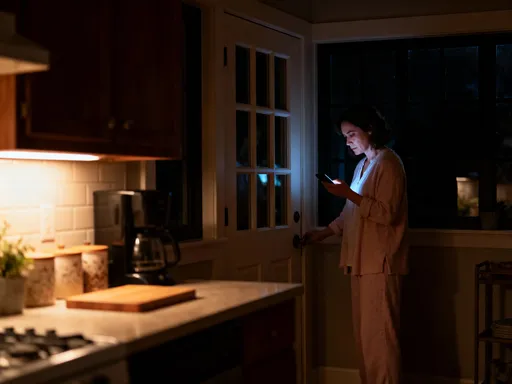
And here’s the thing I didn’t expect: the emotional relief. When I could see all my tasks in one place, I stopped carrying them in my head. I wasn’t lying awake at night thinking, “Did I remember to schedule the dentist?” or “What was that thing my boss asked for?” The tool held it for me. It became my external brain, and that freed up so much mental space. I started sleeping better. I smiled more. I felt, for the first time in years, like I was in control.
Integration: Weaving the Platform into Daily Rhythm
It didn’t happen overnight. There were weeks when I fell off track, when I’d forget to update tasks or miss a reminder. But I didn’t give up. Instead, I got kinder to myself. I treated it like building any new habit—like going to the gym or eating more vegetables. Some days were better than others.
What helped most was integrating the platform into my existing routines. Every Sunday evening, I’d sit with my laptop and plan the week ahead. I’d look at my calendar, check in with my family about their schedules, and add key events to my shared board. I’d review upcoming work deadlines, personal goals, and even fun plans—like a dinner reservation or a weekend hike. That hour became sacred. No phones. No distractions. Just me, planning with care.
During the week, I’d do a quick 10-minute check-in each morning. I’d open the app, review my tasks for the day, and adjust if needed. If a meeting got canceled, I’d move a personal task into that slot—like calling a friend or reading a chapter of a book. The platform didn’t lock me in; it gave me flexibility with structure.
I also started sharing certain boards with my team and my family. With my kids, we have a simple “Family Plan” board that shows upcoming events—school plays, dentist visits, movie nights. They love seeing it. My daughter even adds her own tasks, like “Practice piano” or “Finish science project.” It’s not about control. It’s about connection. We’re all on the same page, literally.
And because the platform syncs with my calendar and sends gentle reminders, I stopped double-booking or forgetting important dates. No more showing up to a work call while my son waited in the car for soccer practice. No more missing a teacher conference because it wasn’t written down. The tool didn’t make me more responsible—it made it easier to be responsible.
Long-Term Gains: More Than Just Productivity
It’s been over two years since I made this change. And if you asked me what the biggest benefit has been, I wouldn’t say it’s getting more done. I’d say it’s getting to be more present. I walk my dog without checking my phone. I listen to my kids’ stories without mentally drafting emails. I take real breaks—actual pauses—instead of just switching from one screen to another.
I’ve also noticed a shift in how I think about time. I used to see it as a finite resource I was constantly running out of. Now, I see it as something I can shape. I’m not a slave to my schedule. I’m the designer of it. And that’s given me a deep sense of agency I didn’t know I was missing.
The platform has also helped me grow in ways I didn’t expect. I started a small side project—writing short essays about motherhood and work—that I’d never have had the mental space for before. I’ve taken online courses, reconnected with old friends, even started journaling again. These aren’t “productivity wins.” They’re life wins. And they happened because I stopped treating every free moment as a gap to fill and started seeing it as space to live.
My confidence has grown, too. I used to say yes to everything out of fear—fear of disappointing people, fear of falling behind, fear of being seen as incapable. Now, I can look at my board, see what’s already on my plate, and say, “I’d love to help, but I can’t take that on right now.” And you know what? People respect that. They don’t think less of me. They often say, “Thank you for being honest.”
Tips from the Trenches: What Actually Works in Real Life
If you’re thinking about trying a project management platform, I’ll be honest—start small. Don’t try to build a perfect system on day one. That’s how most of us fail. Instead, pick one area of your life that feels messy or overwhelming. Is it work projects? Household chores? Planning family activities? Choose one. Just one.
Next, capture three recurring responsibilities in that area. For example: “Weekly team meeting,” “Grocery shopping,” “Laundry.” Add them to your board with realistic due dates and time estimates. Don’t overthink it. Just get them out of your head and into the system.
Set a weekly review—Sunday evening, Monday morning, whenever works for you. Spend 20 minutes looking at the week ahead. Adjust deadlines, add new tasks, remove what’s no longer relevant. This is where the magic happens. It’s not about perfection. It’s about alignment.
Use simple visual cues. Color codes work better than complex labels. A red dot for urgent, green for done, yellow for in progress—something intuitive you can glance at and understand. Avoid jargon. This isn’t a corporate audit. It’s your life.
And please—forgive yourself when you miss a task or forget to update a card. This isn’t about being perfect. It’s about making progress. The goal isn’t to never fall off. It’s to make it easier to get back on.
If you’re comfortable, invite others into shared spaces. A family board, a team project, even a shared grocery list. It reduces the mental load on you and creates transparency. You’re not doing everything alone—and you don’t have to manage everything alone either.
The Ripple Effect: Calm, Confidence, and Care
The most beautiful part of this journey has been watching the ripple effect. My calm has become contagious. My team meetings are shorter and more focused. My colleagues have started using the platform too—not because I pushed them, but because they saw how much clearer I was showing up.
At home, my kids have learned to respect focus time. When my “Do Not Disturb” sign is up, they know Mom is working—but they also know that when it comes down, I’m all theirs. We’ve created boundaries that protect our time and deepen our connection.
The platform has become more than a tool. It’s a promise I keep to myself—a daily act of self-care. By organizing my tasks, I’m honoring my energy. By protecting my time, I’m making space for what matters. And by showing up fully—whether at work, at dinner, or on a walk in the park—I’m living a life that feels true.
So if you’re still juggling, still saying yes when you mean no, still feeling like you’re everywhere but present—know this: you don’t have to do it all in your head. There’s a better way. It’s not about being superhuman. It’s about being human, with a little help. And sometimes, that help comes in the form of a simple app that reminds you: you deserve peace. You deserve presence. And you absolutely deserve your evenings back.