I kept saying 'Just drive carefully'—now we actually talk about it
How many times have you waved goodbye as your teen backs out of the driveway, heart pounding, saying nothing more than “Drive safely”? I did that too—until a small tech upgrade changed not just our drives, but our conversations. What used to be a nerve-wracking silence turned into real connection. This isn’t about surveillance or control. It’s about turning anxiety into understanding, one drive at a time. I didn’t want to be the nagging parent, the one who turned every car key into a lecture. But I also couldn’t ignore the knot in my stomach every time my daughter pulled away. Then we found a simple tool that didn’t just track her driving—it opened the door to honest talks, mutual respect, and a little more peace for both of us.
The Silent Goodbye: When “Drive Safe” Isn’t Enough
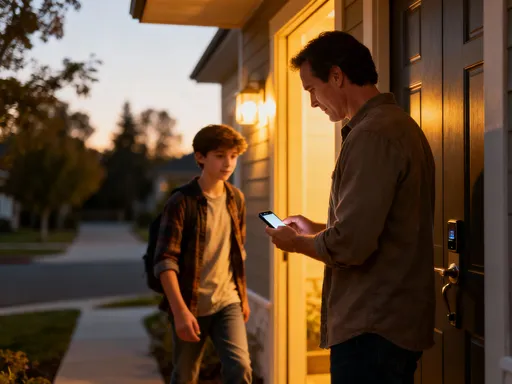
There’s something about watching your child drive off for the first time—especially if they’re a teenager—that makes your breath catch. You stand there, waving, smiling, maybe even pretending you’re completely calm. But inside, your heart is racing. You’ve given the speech a hundred times: “Buckle up. No phone. Watch your speed.” And still, when they turn the key, all you can manage is, “Drive safe.” It’s a ritual, really. A quiet moment filled with everything we don’t say.
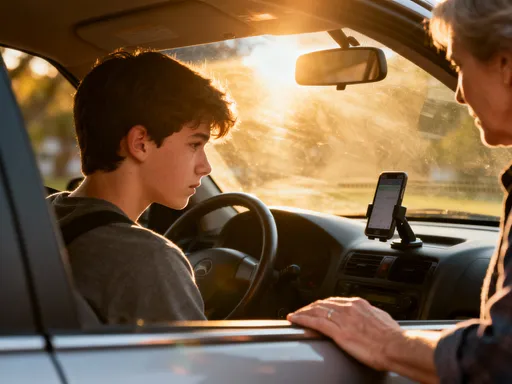
I remember the first time my daughter, Emma, drove alone. She was sixteen, confident, a little too eager to prove she was ready. I stood in the driveway, hands clasped like I was praying, and said the words like they could somehow protect her: “Just drive carefully.” But the truth? I felt powerless. That phrase—“drive safe”—was all I had. It was my emotional safety net, not hers. And when she disappeared around the corner, I didn’t feel relief. I felt dread. Because what did “drive safe” even mean? Was she speeding? Was she texting? Was she paying attention at all?
For months, this pattern repeated. I’d send her off with the same hollow words, and she’d come back with a shrug and a “I’m fine, Mom.” There was no real conversation, no way to know what was really happening behind the wheel. Our communication was stuck in a loop of worry and defensiveness. I wanted to trust her. She wanted to feel trusted. But without any real insight, we were both just guessing—and guessing breeds fear.
Before the Tech: Misunderstandings and Missed Chances
Before we found a better way, our car talks always ended the same: with tension. One evening, Emma came home late. Her voice was tight when I asked where she’d been. “Just driving,” she said. I noticed a scratch on the bumper. “What happened?” I asked, trying to sound calm. “Nothing serious,” she muttered. I pressed a little more, and suddenly she snapped: “You don’t trust me at all!”
It wasn’t true—of course I trusted her. But how could I not worry? Without any real information, every small thing became a red flag. A late return. A new dent. A distracted tone. My imagination filled in the blanks, and usually, it painted the worst picture. Was she speeding? Braking too hard? Picking up friends and driving around aimlessly? I had no idea. And because I didn’t know, I defaulted to fear. And fear, I’ve learned, doesn’t build trust—it breaks it.
Emma felt it too. She told me later that she always braced herself for a lecture when she got home. “It felt like you were waiting to catch me doing something wrong,” she said. That broke my heart. I never wanted her to feel watched or judged. I just wanted her to come home safe. But without a better way to talk about driving, our conversations became battlegrounds instead of bridges. We were both trying to do the right thing, but we were doing it all wrong.
How Driving Behavior Analysis Works—Without the Jargon
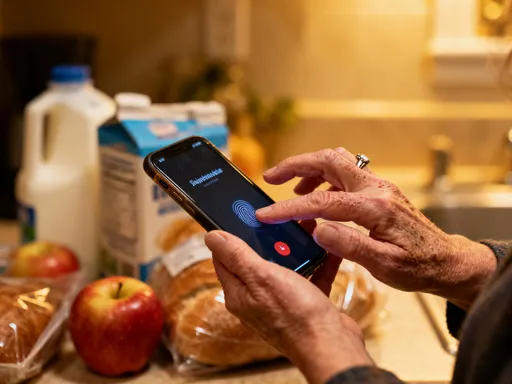
Everything changed when a friend mentioned a simple app she used with her son. “It’s not about spying,” she said. “It’s about feedback.” Skeptical but curious, I looked into it. What I discovered wasn’t some complicated tracking system or Big Brother gadget. It was surprisingly simple—like a fitness tracker, but for driving.
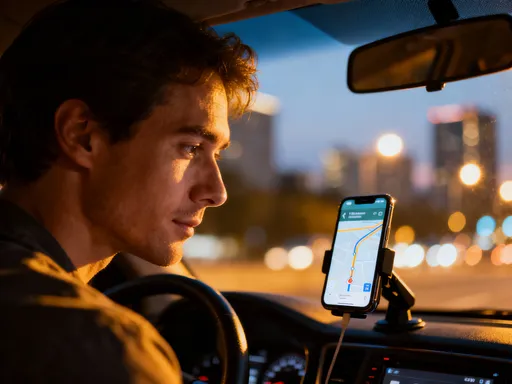
Most of these tools work through your phone or a small device plugged into the car’s diagnostic port. They don’t record video or listen in. Instead, they use sensors to detect things like sudden braking, sharp turns, speeding, and phone use while driving. Some even notice if you’re distracted—like when you pick up your phone or take your eyes off the road too long. The data isn’t used to punish. It’s meant to inform. Think of it like a report card for driving habits—objective, neutral, and focused on improvement.
The best part? It’s not invasive. You don’t get alerts every time your teen slows down. It’s about patterns, not perfection. And the insights are shared—not hidden. Emma and I could look at the reports together, talk about what they meant, and decide how to improve. It wasn’t about me watching her. It was about us learning together. For the first time, we had facts instead of fears. And facts, it turns out, make for much better conversations.
The First Real Conversation We Had About Driving
The first time the app flagged a hard brake, I almost didn’t mention it. My old instinct was to jump in with, “What were you thinking?” But I paused. This wasn’t about blame. It was about understanding. So instead, I said, “Hey, I saw the app noticed a hard brake today. Everything okay?”
Emma looked surprised. Then she sighed. “Yeah, a car cut me off. I had to stop fast.” She wasn’t defensive. She wasn’t angry. She just explained. And in that moment, something shifted. I wasn’t accusing. She wasn’t hiding. We were just talking—really talking—about what happened on the road. No drama. No tension. Just two people trying to stay safe.
That small moment was a turning point. It wasn’t the data that mattered most. It was how we used it. Because the numbers were neutral, they didn’t carry the weight of judgment. They were just information. And information gave us a starting point for empathy, not conflict. I could say, “That sounds scary,” instead of “You’re too reckless.” She could say, “I was startled,” instead of “You’re always on my case.” We weren’t fighting anymore. We were listening.
From Monitoring to Mentoring: Shifting the Parent-Child Dynamic
Over time, something beautiful happened: our dynamic changed. I stopped being the “car police,” and Emma stopped feeling like she was under investigation. Instead, we became a team. We’d sit down once a week and look at her driving summary—not to criticize, but to celebrate progress and plan improvements.
One week, her phone distraction score was high. Instead of lecturing, I asked, “What’s making it hard to keep your phone down?” She admitted she was trying to respond to group texts while driving. We talked about setting “do not disturb” modes and putting the phone in the back seat. It wasn’t me telling her what to do. It was us solving a problem together.
Another time, she noticed her smooth braking score was low. “I didn’t even realize I was doing that,” she said. We practiced gentle stops in an empty parking lot. It turned into a fun, low-pressure lesson. These small moments added up. Driving became less of a battleground and more of a shared journey. I wasn’t controlling her. I was guiding her. And she wasn’t rebelling. She was learning. That shift—from monitoring to mentoring—changed everything.
Building Responsibility, One Trip at a Time
One of the most powerful changes I’ve seen in Emma is how she’s started to self-correct. She doesn’t wait for me to point out a hard brake or a distracted moment. She notices it herself. “Mom, I think I was a little rushed at that light,” she’ll say. Or, “I left early today so I wouldn’t have to speed.”
That kind of awareness didn’t come from fear. It came from feedback. The app gave her a mirror—not a judgment, but a reflection of her habits. And with that mirror, she began to take ownership. She started setting her own goals: “This week, I want to keep my phone down the whole time.” “I want to improve my smooth driving score.”
What’s amazing is that this responsibility has spilled over into other areas of her life. She’s more mindful about her time, her choices, even her communication. Driving, it turns out, isn’t just about getting from point A to B. It’s a training ground for adulthood. Every trip is a chance to practice focus, patience, and decision-making. And with a little tech support, those lessons stick.
More Than Safer Drivers—Closer Families
The truth is, I don’t care about perfect driving scores. I care about my daughter coming home safe. But what I didn’t expect was how much closer we’d become in the process. Those little check-ins about braking habits or phone use turned into real conversations about stress, confidence, and life on the road—both literal and metaphorical.
Now, when Emma gets in the car, I don’t just say, “Drive safe.” I say, “Have a good drive. Let me know when you get there.” And when she does, sometimes we talk about her trip. Not because I’m worried, but because I’m interested. Because I’m part of her journey.
This isn’t about technology replacing parenting. It’s about technology enhancing it. It gave us a tool to move past fear and into understanding. It turned silence into dialogue, anxiety into action, and distance into connection. We’re not just building better drivers. We’re building stronger relationships—one honest conversation at a time.
If you’re still standing in the driveway, heart pounding, saying the same old words, I get it. But you don’t have to stay stuck there. A small change—a simple app, a new way of talking—can open doors you didn’t know were closed. It won’t make driving risk-free. Nothing can. But it can make the journey a little calmer, a little kinder, and a lot more connected. And sometimes, that’s exactly what we all need.